

Learning how to prevent bedsores in bedridden patients is one of the most critical responsibilities a caregiver in Pakistan can undertake. Whether caring for an aging parent recovering from a stroke or a loved one undergoing long-term post-operative rehabilitation, skin breakdown can occur with alarming speed—often within just 24 to 48 hours of uninterrupted bedrest.
📑 Table of Contents
- Understanding Bedsores: The 4 Clinical Stages
- The Most Vulnerable Pressure Points on the Body
- The 24/7 Solution: Alternating Pressure Air Mattresses
- The 2-Hour Turning Rule for Home Caregivers
- Hygiene, Moisture Control, and Disposable Underpads
- Nutrition: Protein and Hydration for Tissue Repair
- Frequently Asked Questions (FAQs)
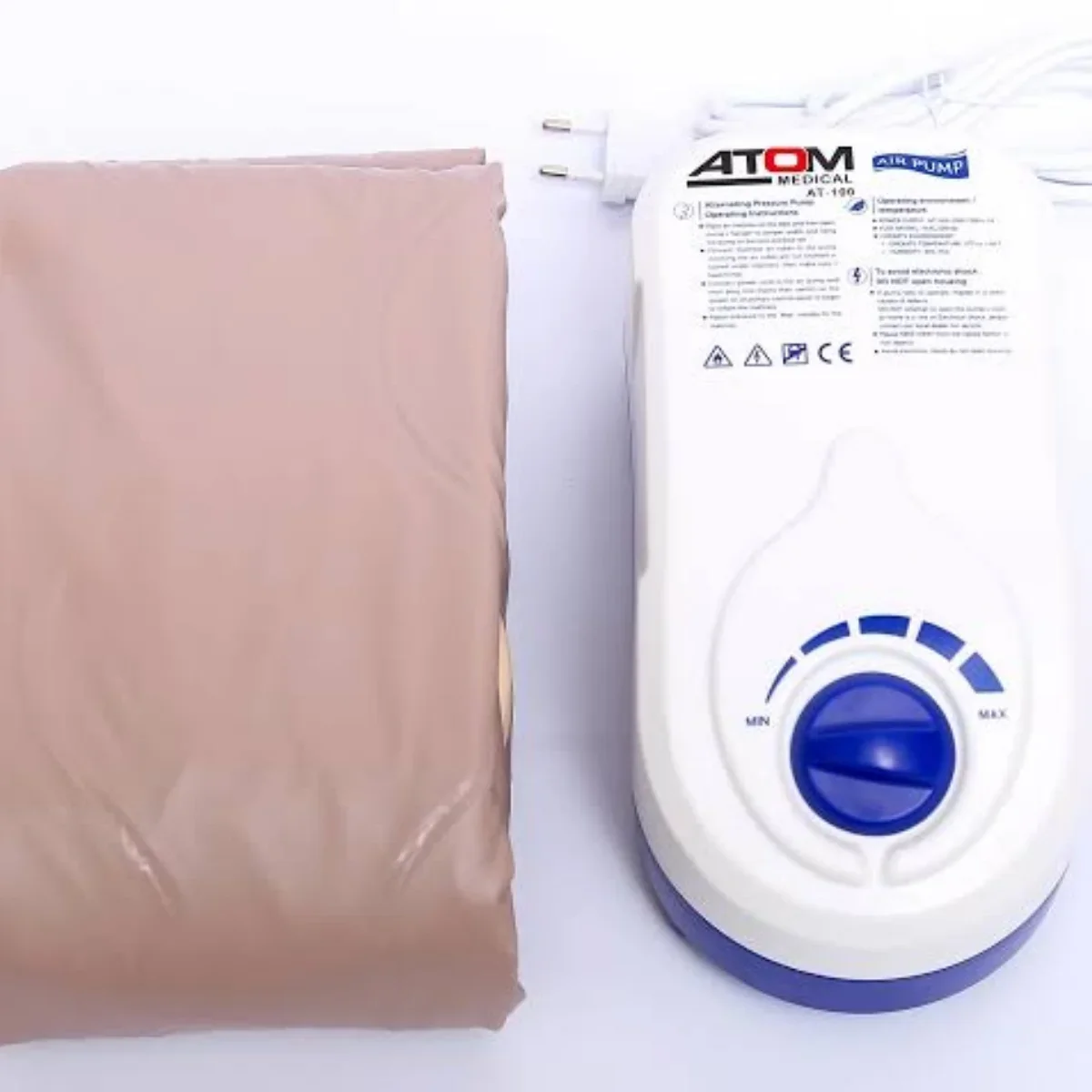
In our traditional close-knit families, multiple relatives often take turns looking after bedridden elders. But without the proper clinical protocol and pressure-relieving equipment, well-intentioned care isn’t enough to prevent painful decubitus ulcers. Let’s explore the medical stages of bedsores, proper repositioning routines, and how alternating pressure bubble mattresses keep skin safe and healthy.
Understanding Bedsores: The 4 Clinical Stages
Bedsores (medically termed pressure ulcers or decubitus ulcers) occur when sustained weight restricts capillary blood flow to the skin and subcutaneous tissue. According to clinical prevention standards by the National Pressure Injury Advisory Panel (NPIAP), early detection is vital:
- Stage 1: Persistent redness that does not turn white (blanch) when gently pressed. Skin remains intact but feels warm or tender.
- Stage 2: Shallow open blister or abrasion affecting the epidermis and upper dermis.
- Stage 3: Deep ulcer extending through subcutaneous fat tissue, forming a crater-like wound.
- Stage 4: Severe tissue necrosis exposing muscle, tendon, or bone—requiring immediate surgical debridement and hospitalization.
The Most Vulnerable Pressure Points on the Body
Pressure ulcers develop where bones sit closest to the skin with minimal intervening fat. In patients lying on their backs, the tailbone (sacrum), heels, shoulder blades, and back of the head bear up to 75% of total body pressure.
For side-lying patients, the hips (greater trochanter), ankles, and knees are vulnerable. Inspecting these high-risk areas twice daily under bright lighting is the first line of defense.

The 24/7 Solution: Alternating Pressure Air Mattresses
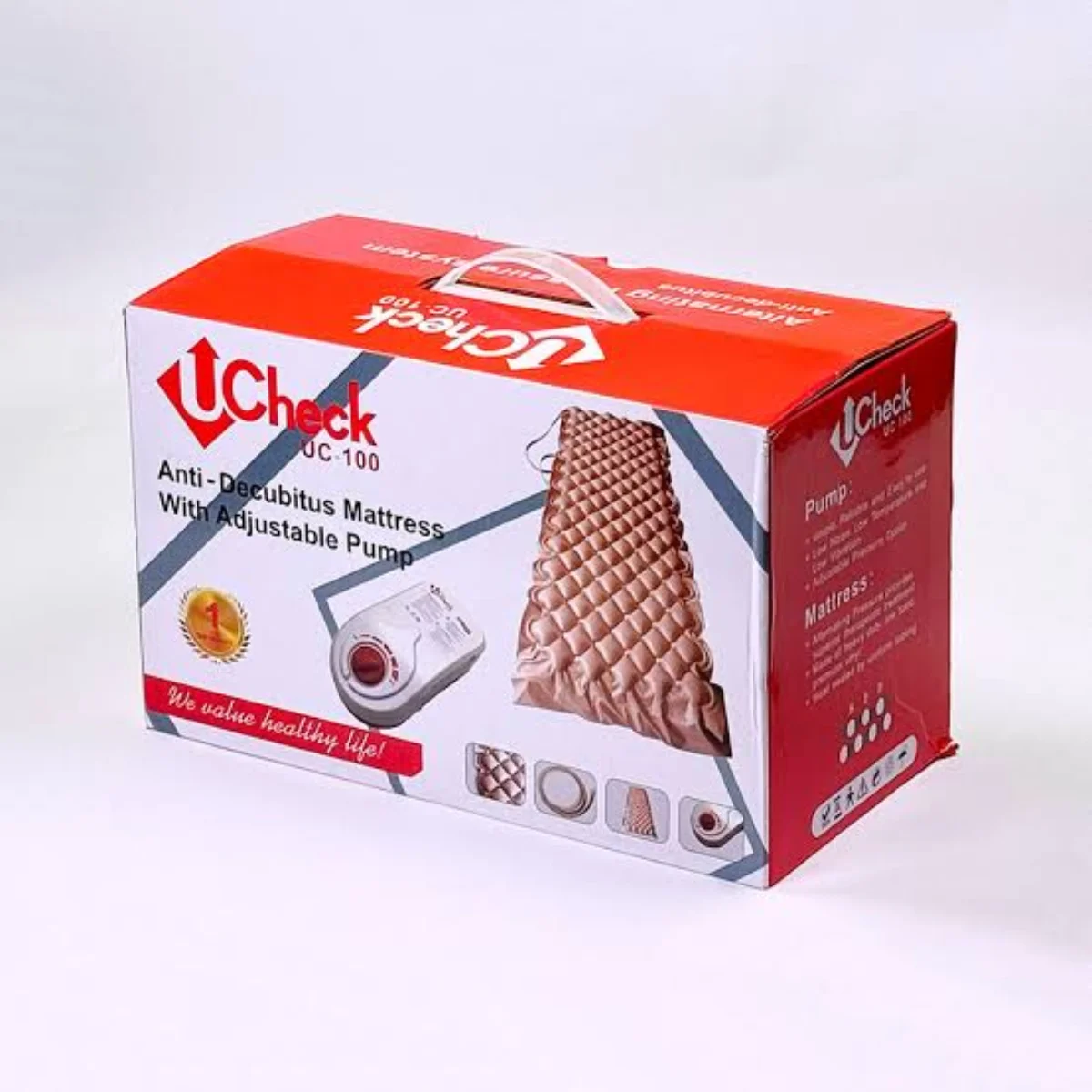
Regular cotton or foam home mattresses cannot relieve sustained point pressure. This is why investing in an anti bedsore air mattress is the single most effective medical intervention you can make.
The UCheck UC-100 Medical Bubble Air Mattress features 130 independent air cells that rhythmically inflate and deflate in alternating rows every 10 to 12 minutes. By constantly shifting pressure points, it ensures no single patch of skin is deprived of oxygenated blood flow for more than a few minutes.
The 2-Hour Turning Rule for Home Caregivers
Even with an alternating pressure mattress, bedridden individuals must be repositioned at least every two hours. Use a structured 30-degree tilt routine:
- Morning (8:00 AM): Back-lying with knees supported by a pillow.
- Mid-Morning (10:00 AM): 30-degree tilt to the right side with a cushion between knees.
- Afternoon (12:00 PM): 30-degree tilt to the left side.
- Repeat: Maintain this cycle through waking hours to relieve pressure on the sacrum.
Hygiene, Moisture Control, and Disposable Underpads
Excess moisture from sweat, urinary incontinence, or wound exudate rapidly softens (macerates) skin, making it tear under friction. Pair your pressure mattress with high-absorbency disposable underpads (chux sheets) to keep skin dry.
Clean skin with mild, pH-balanced cleansing foam and warm water. Avoid vigorous rubbing with dry towels, and apply zinc oxide barrier creams to protect vulnerable skin from moisture dermatitis.
Nutrition: Protein and Hydration for Tissue Repair
Healthy skin requires adequate fuel to regenerate. Malnutrition and dehydration dramatically increase bedsore vulnerability.
Ensure your bedridden family member consumes sufficient daily protein (boiled eggs, chicken broth, lentils, yogurt) and adequate water to maintain cellular turgor and tissue resilience.
Need hospital-grade home care equipment? Browse our certified range of Medical Air Mattresses & Patient Care Supplies with fast delivery across Pakistan.
Frequently Asked Questions (FAQs)
How quickly can a bedsore develop in a bedridden patient?
In immobile patients, Stage 1 bedsores can develop in as little as 2 hours of continuous unrelieved pressure. Within 24 to 48 hours without turning or pressure relief, tissue damage can progress to Stage 2 or 3.
Does an air mattress completely eliminate the need to turn patients?
While an alternating pressure mattress dramatically reduces peak point pressure, caregivers should still gently reposition the patient every 2 to 3 hours to stimulate general blood flow, improve breathing, and inspect the skin.
Can bedsores heal completely at home?
Stage 1 and shallow Stage 2 bedsores can heal completely at home with prompt pressure relief (using an alternating air mattress), diligent hygiene, barrier creams, and proper nutrition. Stage 3 and 4 ulcers require medical supervision by a doctor or wound care specialist.
Pingback: Orthopedic Seat Cushion vs Air Cushion Ring: Which Helps Tailbone and Back Pain? - Civil Surgical