

- The Anatomy of a Mesh Plate: 1,000 Microscopic Apertures
- The 3-Minute Post-Use Daily Cleaning Routine
- The Weekly Deep Descaling Protocol (White Vinegar Flush)
- Deadly Maintenance Mistakes: What Destroys Mesh Nebulizers
- Disinfecting Pediatric Masks & Preventing Microbial Biofilms
- Frequently Asked Questions (Mesh Cleaning FAQs)
How to Clean and Disinfect a Mesh Nebulizer: Step-by-Step Maintenance Guide
Portable vibrating mesh nebulizers—such as the acclaimed Medisign Tiny Mesh Nebulizer—have revolutionized asthma, bronchiolitis, and smog cough management in Pakistan. Being whisper-silent, lightweight, and battery-operated, they allow parents to administer life-saving bronchodilators to sleeping babies without the deafening roar of traditional piston compressor machines.
However, medical distributors frequently receive warranty complaints: “We bought this mesh nebulizer three weeks ago, and now the light turns on but no smoke/mist comes out!” In 99% of cases, the machine is not defective—the microscopic mesh screen is simply clogged with dried medication salts or hard tap water calcium deposits. Mastering proper cleaning techniques ensures your device lasts for years.
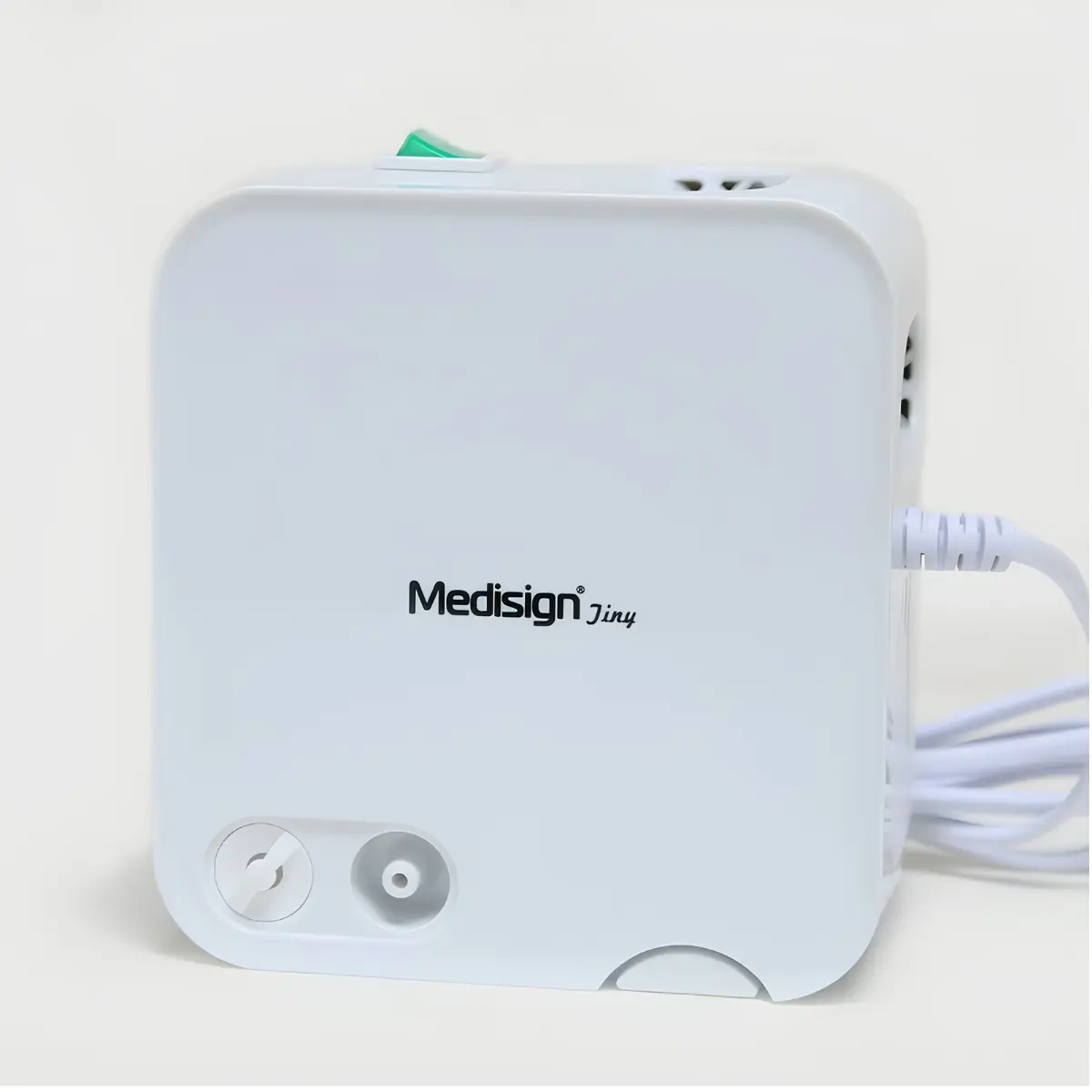
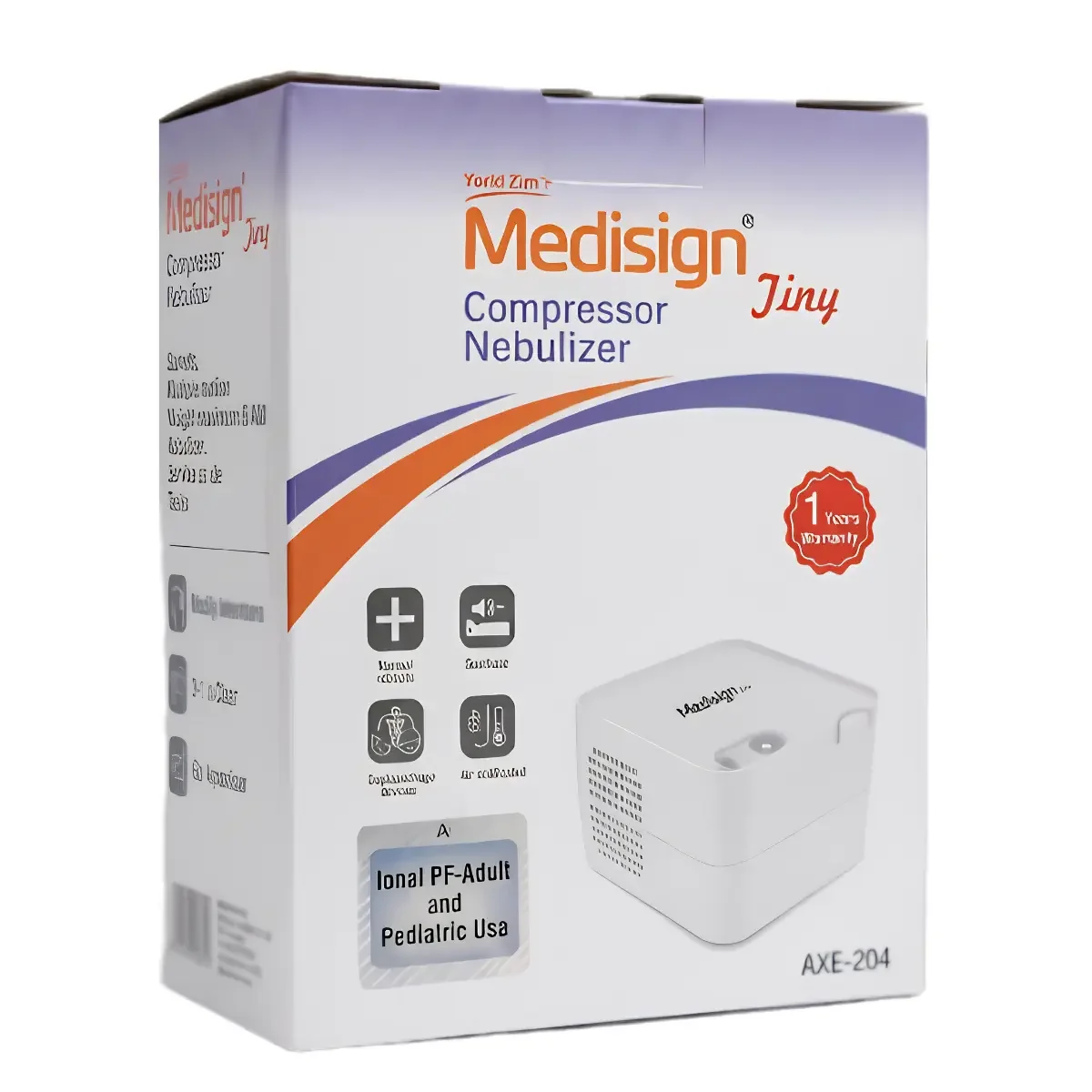
Medisign Tiny portable mesh nebulizers at Civil Surgical Pakistan
1. The Anatomy of a Mesh Plate: 1,000 Microscopic Apertures
A vibrating mesh nebulizer operates via a piezoelectric ceramic element vibrating at ultra-high frequencies (over 110 kHz). This vibration pushes liquid medication through a micro-perforated alloy disc containing over 1,000 to 2,000 laser-drilled conical apertures measuring just 3 to 5 microns in diameter.
When you nebulize saline or respiratory steroids (like Budesonide/Pulmicort), liquid evaporates post-session, leaving behind dense microscopic mineral crystals. If left unwashed, these salt crystals solidify inside the 3-micron pores, creating an impenetrable plug that blocks all aerosol generation.
2. The 3-Minute Post-Use Daily Cleaning Routine
Follow this strict protocol immediately after every single inhalation session:
- Discard Residual Medicine: Open the medication chamber cap and dump out any remaining drops. Never leave leftover medicine sitting in the cup between uses.
- The Distilled Water Flush: Pour 2 to 3 ml of warm distilled water into the medicine chamber. Turn on the device and let it nebulize the distilled water for 30 to 60 seconds. This sprays clean water through the micro-pores, washing away drug residues before they crystallize.
- Air-Dry Completely: Detach the medication cup, gently shake off excess droplets, and let it air-dry on a clean paper towel. Never wipe the mesh disc with rough cloth or tissue paper.
3. The Weekly Deep Descaling Protocol (White Vinegar Flush)
If your nebulizer’s mist production has weakened or completely stopped, perform this medical descaling procedure:
- Mix 1 part pure white vinegar (acetic acid) with 2 parts distilled water.
- Pour 3 ml of this mild acidic solution into the medication cup. Turn on the device and let it nebulize for 1 to 2 minutes. The mild acid dissolves hardened calcium scale and saline salt crystals without corroding the metal alloy.
- Empty remaining vinegar, add 3 ml of pure distilled water, and nebulize for 1 minute to flush out all residual vinegar odor.
4. Deadly Maintenance Mistakes: What Destroys Mesh Nebulizers
The table below highlights destructive habits common in Pakistani households:
| Destructive Habit | What Happens Mechanically | Result & Consequence |
|---|---|---|
| Poking with Needles / Pins | Ruptures the delicate micro-alloy membrane | PERMANENT DESTRUCTION. Device cannot be repaired. |
| Washing with Municipal Tap Water | High calcium and hard water minerals calcify pores | Permanent calcification within 2 to 3 weeks. |
| Submerging Main Motor Body | Water floods battery compartment & circuit board | Electrical short-circuit; power failure. |
| Rubbing with Cotton Buds / Q-tips | Cotton fibers snag in microscopic aperture edges | Severe clogging and distorted droplet distribution. |
5. Disinfecting Pediatric Masks & Preventing Microbial Biofilms
The plastic inhalation mask and mouthpiece come into direct contact with saliva and respiratory flora. Soak masks weekly in a solution of warm water with mild dishwashing liquid, rinse thoroughly, and soak for 15 minutes in a 70% isopropyl alcohol wipe or mild antiseptic solution to eliminate bacterial biofilm formation.
6. Frequently Asked Questions (Mesh Cleaning FAQs)
Q1: Why does my portable mesh nebulizer stop producing mist?
A: Dried medication crystals (from saline or steroids) and calcium scale from hard tap water clog the micro-pores, preventing aerosolization.
Q2: How do you unclog a clogged mesh nebulizer plate safely at home?
A: Add 2 to 3 ml of warm distilled water mixed with 1 ml of white vinegar into the medication cup. Run the device for 1 to 2 minutes to let the mild acid dissolve deposits, then flush with pure distilled water.
Q3: Can you use a needle or pin to clean a mesh nebulizer?
A: NEVER touch or poke the delicate mesh plate with needles, pins, or toothpicks. Mechanical contact punctures and permanently ruins the micro-mesh aperture array.
Q4: Can I wash nebulizer parts with Pakistani municipal tap water?
A: Never use hard municipal tap water to clean the medication cup or mesh. Tap water in Pakistani cities has high mineral content that permanently calcifies the micro-pores. Always use distilled or boiled water.
Discover certified portable mesh nebulizers, replacement medication cups, and pediatric masks at Civil Surgical Pakistan.