

Track Your Daily Blood Sugar Online (Fasting & Post-Meal Log)
Don’t lose your test readings on loose slips. Use our free, private digital glucose tracker with automatic date/time capture, ADA target analysis, and unbranded 1-click Doctor PDF export for your next clinic visit.
- The Diabetes Landscape in Pakistan: Why Tight Control Matters
- Master Blood Sugar Level Chart: Fasting, Post-Meal & HbA1c
- Managing Carbohydrate Spikes: Roti, Rice & Chai
- Hypoglycemia Triage: The “Rule of 15” for Low Blood Sugar
- How to Ensure Precise Glucometer Readings at Home
- Frequently Asked Questions (Blood Sugar FAQs)
Normal Blood Sugar Level Chart in Pakistan: Fasting & Random Guide
Pakistan currently faces a devastating public health crisis: over 33 million citizens live with diagnosed diabetes, representing over 26% of the adult population—the highest national prevalence on Earth. Uncontrolled diabetes silently damages microvascular and macrovascular systems, leading to diabetic retinopathy (blindness), end-stage renal failure requiring dialysis, peripheral neuropathy, and lower-limb amputations.
Yet for millions of Pakistani households, testing blood sugar at home often leads to confusion: “My fasting is 115 mg/dL—is that normal? Why did my sugar jump to 220 mg/dL after eating biryani?” Having a clear, clinically validated blood sugar level chart tailored to local Pakistani dietary habits is the foundation of long, healthy diabetic management.
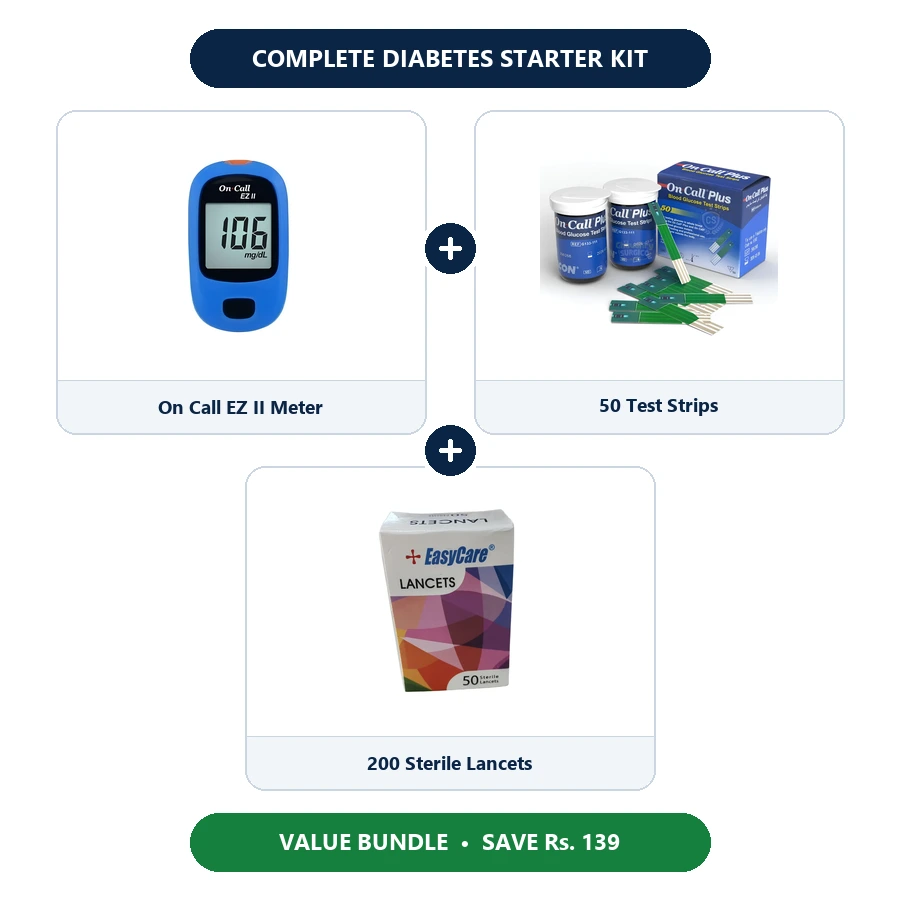
Complete Diabetes Starter Kit (On Call EZ II Meter + 50 Strips + 200 Lancets) at Civil Surgical Pakistan
1. The Diabetes Landscape in Pakistan: Why Tight Control Matters
Unlike Western populations where diabetes often develops in the late 50s or 60s, South Asians possess a unique metabolic phenotype (“thin-fat Indian phenotype”): higher visceral belly fat and earlier insulin resistance. In Pakistan, individuals frequently develop Type 2 diabetes in their early 30s.
Maintaining glucose within target therapeutic bands drastically decelerates organ damage. Studies prove that every 1% reduction in HbA1c reduces microvascular complications (kidney and eye damage) by over 35%.
2. Master Blood Sugar Level Chart: Fasting, Post-Meal & HbA1c
Compare your home glucometer readings against the official clinical standards set by the Pakistan Endocrine Society (PES) and American Diabetes Association (ADA):
| Diagnostic Category | Fasting Blood Sugar (mg/dL) | Post-Meal (2 Hours) (mg/dL) | HbA1c Level (3-Month Avg) |
|---|---|---|---|
| Normal (Non-Diabetic) | 70 to 99 mg/dL | Under 140 mg/dL | Under 5.7% |
| Prediabetes (Impaired) | 100 to 125 mg/dL | 140 to 199 mg/dL | 5.7% to 6.4% |
| Diabetes (Diagnostic) | 126 mg/dL or higher | 200 mg/dL or higher | 6.5% or higher |
| Diabetic Target Goal | 80 to 130 mg/dL | Under 180 mg/dL | Under 7.0% (Personalized) |
| Pregnancy Target (GDM) | Under 95 mg/dL | Under 120 mg/dL (2-hr post) | Under 6.0% |
3. Managing Carbohydrate Spikes: Roti, Rice & Chai
The standard Pakistani diet is heavily carbohydrate-dense. A single medium chapati (wheat roti) contains roughly 25 to 30 grams of carbohydrates, while a plate of chicken biryani easily delivers 80 to 100 grams. To prevent severe post-prandial spikes:
- Swap Refined Flour: Replace white maida with whole-wheat flour mixed with chickpea (besan) or barley (jau) flour to slow gastric glucose absorption.
- The Vegetable / Protein First Rule: Eat your salad, cucumber, and protein (chicken, mutton, or daal) before eating your roti or rice. The fiber and protein coat the intestinal lining, blunting post-meal sugar spikes by up to 40%.
- Beware of Liquid Sugar: A single cup of traditional doodh patti chai with 2 teaspoons of sugar injects 10 grams of sucrose directly into the bloodstream, triggering an immediate spike.
4. Hypoglycemia Triage: The “Rule of 15” for Low Blood Sugar
Symptoms: Cold profuse sweating, trembling hands, severe hunger, blurred vision, dizziness, and heart palpitations.
- Consume 15g of Fast Sugar: Drink 1/2 glass of fruit juice, 1/2 can of regular (non-diet) soda, or 3 teaspoons of table sugar dissolved in water. Never give solid chocolate or milk, as fat slows sugar absorption.
- Wait 15 Minutes: Rest completely. Do not eat a full meal yet.
- Re-Check Blood Sugar: Test with your glucometer. If still under 70 mg/dL, repeat with another 15g of sugar.
- Once Normalized (>80 mg/dL): Eat a complex carb snack (a small piece of roti with cheese or nuts) to prevent rebound drops.
5. How to Ensure Precise Glucometer Readings at Home
To avoid false high or low readings:
- Wash Hands with Warm Water: Never test right after peeling fruit (apples, mangoes) without washing; residual sugar on your fingertips can falsely spike your reading by 50 to 100 mg/dL!
- Dry Completely: Wet hands dilute the blood droplet, causing falsely low numbers.
- Prick the Side of the Fingertip: The sides of your fingers have fewer nerve endings than the sensitive central pads, minimizing pain.
6. Frequently Asked Questions (Blood Sugar FAQs)
Q1: What is the normal fasting blood sugar level in Pakistan?
A: For a non-diabetic adult, normal fasting blood sugar is between 70 mg/dL and 99 mg/dL. A fasting level between 100 mg/dL and 125 mg/dL indicates prediabetes, while 126 mg/dL or higher on two separate tests confirms diabetes.
Q2: What should normal blood sugar be 2 hours after a meal?
A: For non-diabetic individuals, blood sugar should remain under 140 mg/dL. For diagnosed diabetic patients, the target post-prandial goal is under 180 mg/dL.
Q3: How does a traditional Pakistani diet affect blood sugar spikes?
A: Pakistani meals heavy in refined rotis, white rice, and sweetened doodh patti chai trigger rapid, severe glucose spikes within 60 to 90 minutes of eating.
Q4: What is a dangerous low blood sugar level (hypoglycemia)?
A: A reading below 70 mg/dL is clinically defined as hypoglycemia. Levels below 54 mg/dL represent severe hypoglycemia requiring immediate consumption of 15 grams of fast-acting sugar.
Recommended Certified Blood Glucose Monitors & Test Strips in Pakistan
Accurate self-monitoring of blood glucose (SMBG) requires hospital-grade diagnostic devices with guaranteed strip availability. Civil Surgical supplies 100% genuine, factory-sealed testing equipment with nationwide Cash on Delivery:
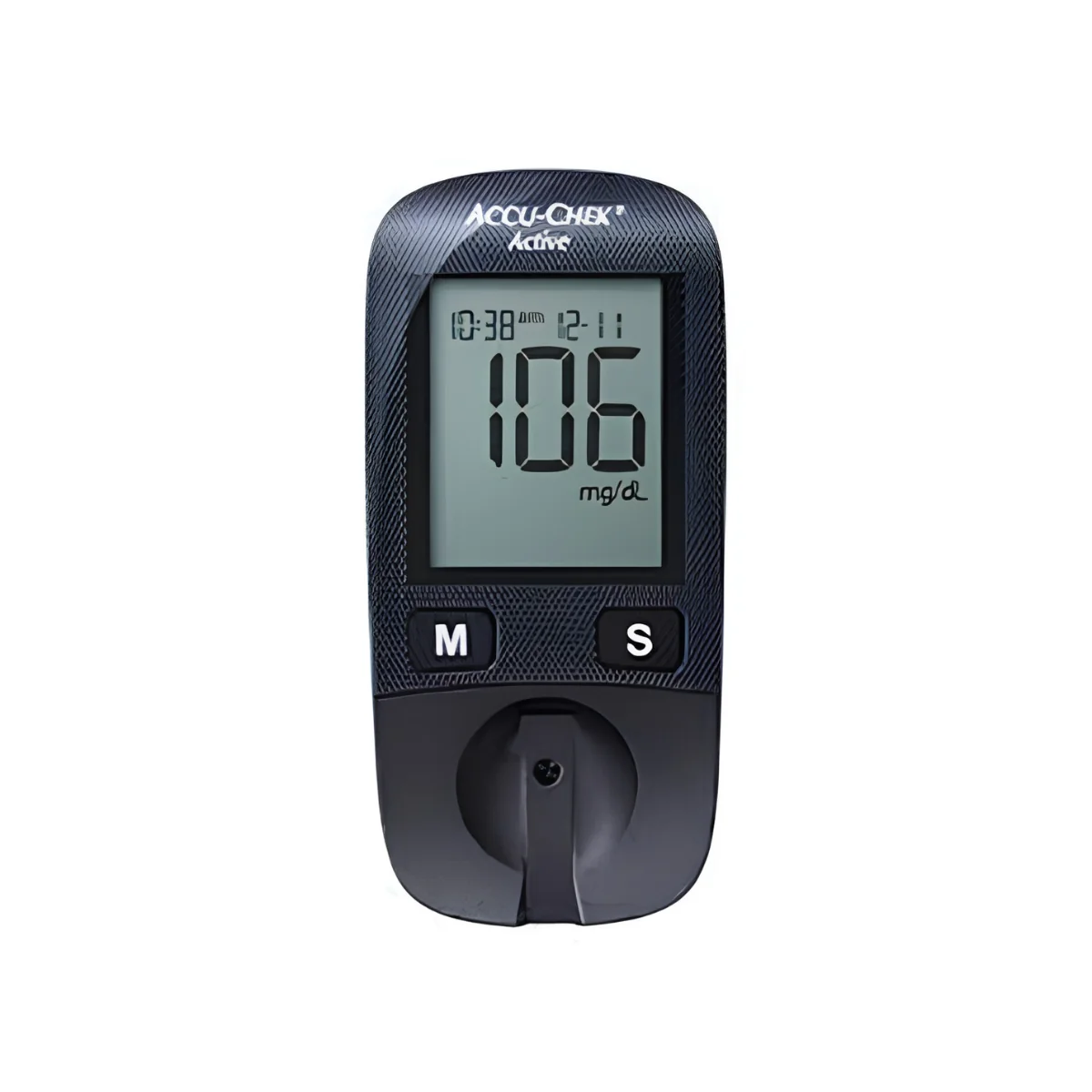
- Roche Accu-Chek Active: German photometric precision with dual in/out meter dosing. Buy genuine Accu-Chek Active 50 Pack Test Strips with verified long expiry.
- On Call EZ II System: Highly economical daily testing. Order the On Call EZ II Glucometer System and compatible On Call Plus 50 Pack Test Strips.
- Infopia GlucoLab: Advanced auto-coding biosensors. Get authentic GlucoLab 50 Pack Test Strips at wholesale direct prices.
- Painless Finger Pricking: Pair your meter with sterile Blue Lancets (200 Pcs Box) for comfort micro-sampling.
Browse our full collection of certified Diabetes Care Products in Pakistan.