

Hepatitis C (HCV) and Hepatitis B (HBsAg) remain critical public health challenges across Pakistan, with the country bearing one of the highest global burdens of chronic viral hepatitis. Rapid diagnostic test (RDT) immunochromatographic cassettes represent the primary frontline screening tool utilized by pathology laboratories, blood collection camps, surgical outpatient units, and pre-employment medical centers.
While rapid cassette tests offer results within 15 to 20 minutes, accurate clinical interpretation, specimen handling, and knowledge of assay limitations are essential to avoiding false-negative and false-positive diagnoses. This clinical guide by Civil Surgical Pakistan details standard operating procedures for healthcare practitioners.
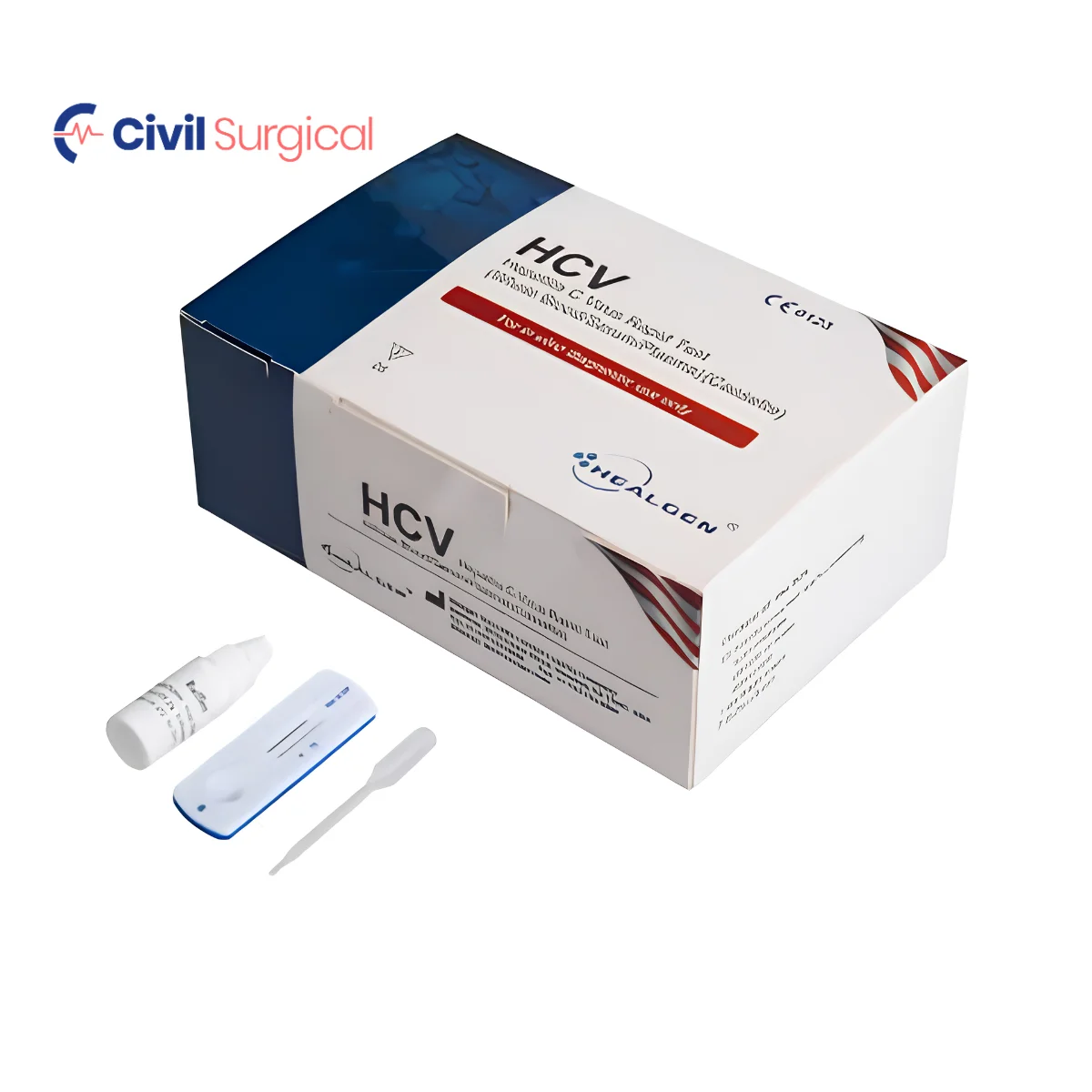
1. The Science: Lateral Flow Immunochromatographic Assay
Rapid test cassettes utilize recombinant hepatitis antigens (for HCV antibody detection) or monoclonal antibodies (for HBsAg surface antigen detection) immobilized onto a nitrocellulose membrane. As whole blood, serum, or plasma migrates via capillary action, gold-conjugate complexes bind to specific viral markers, producing visible pink/purple bands.
Leading diagnostic products, such as Healgen HCV Rapid Diagnostic Test Kits and Healgen HBsAg Rapid Test Kits, provide high relative sensitivity (>99.0%) and specificity (>99.5%) when stored and operated correctly.
2. How to Read Test Results: Step-by-Step Clinical Interpretation
After adding the specified specimen volume (typically 1 drop / 10 μL of serum/plasma, or 20 μL of whole blood) followed by 2 drops of assay buffer into the sample well (S), results must be read strictly between 15 and 20 minutes. Do not interpret results after 20 minutes, as background drying artifacts can create false bands.
| Observed Line Pattern | Clinical Interpretation | Recommended Medical Action |
|---|---|---|
| Line at ‘C’ ONLY (No line at ‘T’) | NON-REACTIVE (Negative) | No antibodies/antigens detected. Retest in 3-6 months if recent high-risk exposure suspected (window period). |
| Lines at BOTH ‘C’ AND ‘T’ | REACTIVE (Positive) | Patient has antibodies/antigens. Refer for confirmatory Quantitative PCR (HCV RNA / HBV DNA) and liver function panel. |
| NO Line at ‘C’ (With or without line at ‘T’) | INVALID TEST | Insufficient sample, expired buffer, or damaged membrane. Discard cassette and repeat immediately with a fresh kit. |
What Does a Faint Line at the ‘T’ Region Signify?
One of the most frequent clinical dilemmas faced by medical staff in Pakistan is observing a faint, pale pink line at the Test (T) region. Clinical Protocol: Any discernible colored band at the ‘T’ region, regardless of intensity, must be interpreted as REACTIVE.
A faint band typically indicates:
- Early seroconversion where antibody titers are still climbing.
- Past resolved infection where residual circulating antibodies remain detectable.
- Diluted sample from excessive buffer application.
- Mandatory Next Step: Never dismiss a faint line as negative. Order a confirmatory ELISA or Real-Time PCR test to determine active viral replication.
Universal Biosafety & Specimen Handling in Clinics
When performing rapid blood screenings, healthcare staff must adhere to strict biohazard containment standards:
- Wear Powder-Free Examination Gloves: Protect phlebotomists using Senior Medical Latex Examination Gloves to prevent cross-contamination.
- Single-Use Sterile Lancets: Never reuse blood collection needles; utilize disposable Sterilized Blood Lancets.
- Proper Summer Temperature Storage: Store cassettes sealed in their foil pouches between 2°C and 30°C. In hot regions of Pakistan, avoid leaving test kits in unconditioned vehicles or near direct windows. Do not freeze.
- Biohazard Disposal: Used cassettes, lancets, and contaminated alcohol prep pads must be discarded into designated yellow puncture-proof sharps containers.
Frequently Asked Questions (HCV & HBsAg Screening)
Q1: What is the window period for HCV rapid antibody tests?
A: The window period for Hepatitis C antibody detection is generally 4 to 10 weeks post-exposure. A negative test within this window cannot definitively rule out acute infection.
Q2: Does a positive HCV rapid test mean the patient currently has active hepatitis?
A: Not necessarily. The rapid test detects antibodies, which persist for life even if the patient cleared the virus spontaneously or through antiviral therapy. An HCV RNA PCR test is necessary to confirm active viremia.
Q3: Where can pathology labs buy authentic rapid test kits in bulk in Pakistan?
A: Civil Surgical provides factory-direct master cartons of Healgen HCV, HBsAg, and H. Pylori rapid test cassettes with batch certificates across Karachi, Lahore, Islamabad, and nationwide.
Source authentic diagnostic rapid cassettes with guaranteed cold-chain transit from Civil Surgical Pakistan with express 24-hour cargo delivery.