

- The Physics of Arterial Compression & Cuff Error
- Clinical Blood Pressure Cuff Sizing Chart (AHA Standards)
- Step-by-Step: How to Measure Upper Arm Circumference
- The Advantage of Universal Wide-Range Cuffs (22-42 cm)
- Anatomical Cuff Alignment & Common Positioning Mistakes
- Frequently Asked Questions (Cuff Sizing FAQs)
Best Cuff Size for Blood Pressure Monitors: Why Sizing Impacts Accuracy in Pakistan
When Pakistani patients purchase a digital blood pressure monitor, they almost always focus on the electronic console—evaluating brand prestige, screen size, memory banks, and warranty. However, cardiovascular research reveals that the single largest source of measurement error at home does not lie in the electronic sensor; it lies in the fabric cuff wrapped around your arm.
Studies published by the American Heart Association (AHA) demonstrate that using an improperly fitted blood pressure cuff can distort systolic readings by up to 15 mmHg. In Pakistan, where cardiovascular disease and obesity frequently co-exist, millions of individuals are either misdiagnosed with severe hypertension or left untreated due to cuff size mismatches.
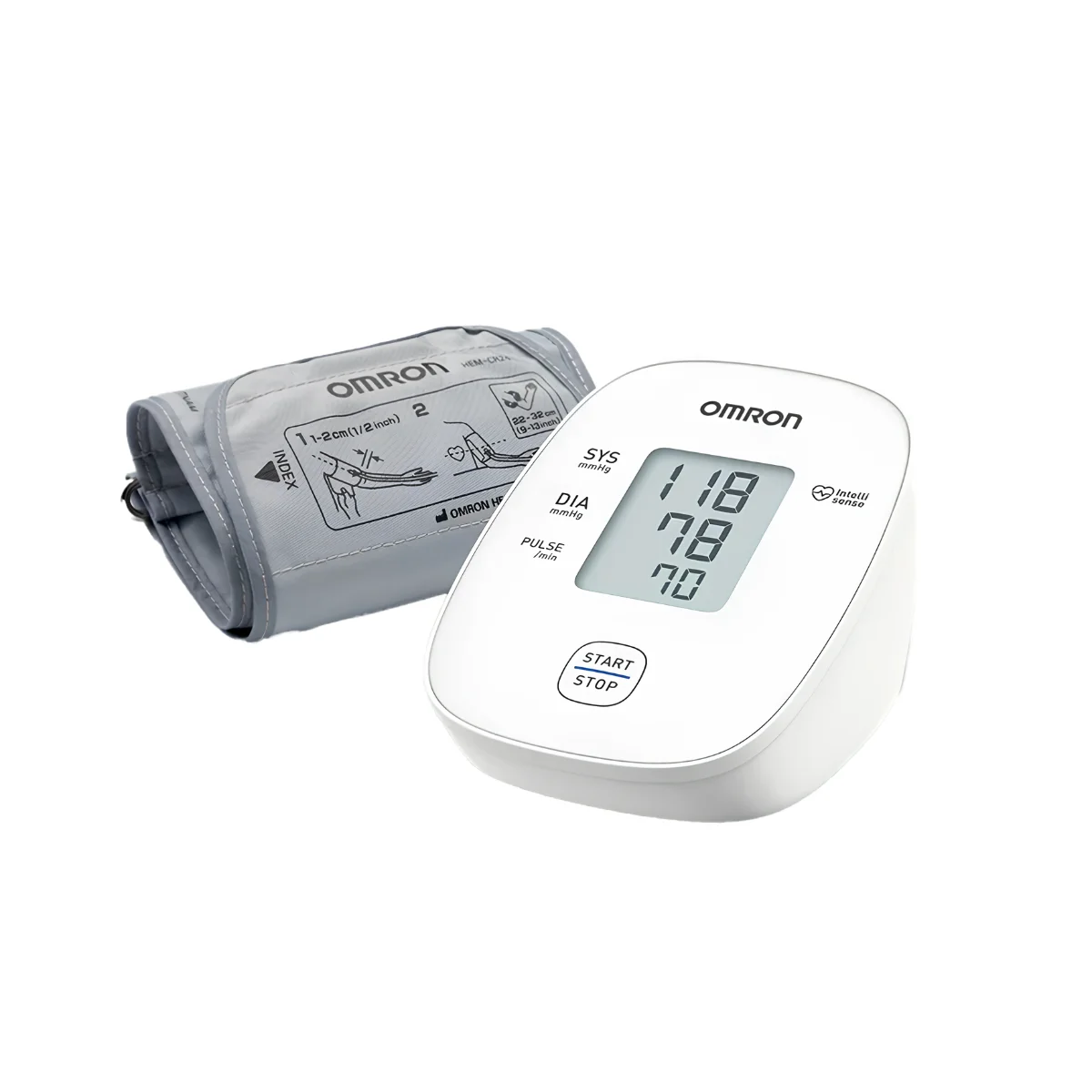
Clinically validated Omron upper-arm blood pressure monitors at Civil Surgical Pakistan
1. The Physics of Arterial Compression & Cuff Error
A blood pressure cuff is not merely a holding strap; it contains an airtight inflatable rubber bladder. To obtain an accurate reading, this bladder must transmit pneumatic pressure evenly through your skin, subcutaneous fat, and muscle tissue to completely compress the brachial artery.
- The “Too Small” Cuff (Miscuffing Overestimation): If your upper arm is thick or muscular and you force a standard medium cuff onto it, the internal bladder cannot wrap far enough around the arm. The pump must exert excessive pressure to compress the artery, resulting in a falsely elevated reading by +8 to +15 mmHg. Patients are frequently prescribed unnecessary antihypertensive drugs due to this simple error.
- The “Too Large” Cuff (Underestimation): If a lean or frail elderly patient uses an oversized cuff, the bladder overlaps excessively. The wide surface area compresses the artery too easily, producing a falsely low reading by -4 to -8 mmHg, masking dangerous underlying hypertension.
2. Clinical Blood Pressure Cuff Sizing Chart (AHA Standards)
Before purchasing or using a monitor, match your arm circumference to the international standard clinical cuff sizes:
| Cuff Designation | Arm Circumference (cm) | Arm Circumference (Inches) | Target Patient Profile |
|---|---|---|---|
| Small Adult | 17 cm to 22 cm | 6.7" to 8.7" | Frail elderly, petite adults, adolescents |
| Medium Adult (Standard) | 22 cm to 32 cm | 8.7" to 12.6" | Average build adults (ships standard in box) |
| Large Adult | 32 cm to 42 cm | 12.6" to 16.5" | Muscular arms, overweight/obese adults |
| Extra-Large / Bariatric | 42 cm to 50 cm | 16.5" to 19.7" | Severe obesity, bodybuilders |
| Universal Wide-Range | 22 cm to 42 cm | 8.7" to 16.5" | All-in-one family solution (Covers 90% of adults) |
3. Step-by-Step: How to Measure Upper Arm Circumference
Do not guess your cuff size. Follow this 3-step measuring routine:
- Stand straight with your bare arm resting relaxed at your side.
- Locate the midpoint between the bony tip of your shoulder (acromion) and the tip of your elbow (olecranon).
- Wrap a flexible cloth measuring tape snug around this exact midpoint. Ensure the tape is flat and not twisted or pulled so tight that it dents the skin. Note the measurement in centimeters.
4. The Advantage of Universal Wide-Range Cuffs (22-42 cm)
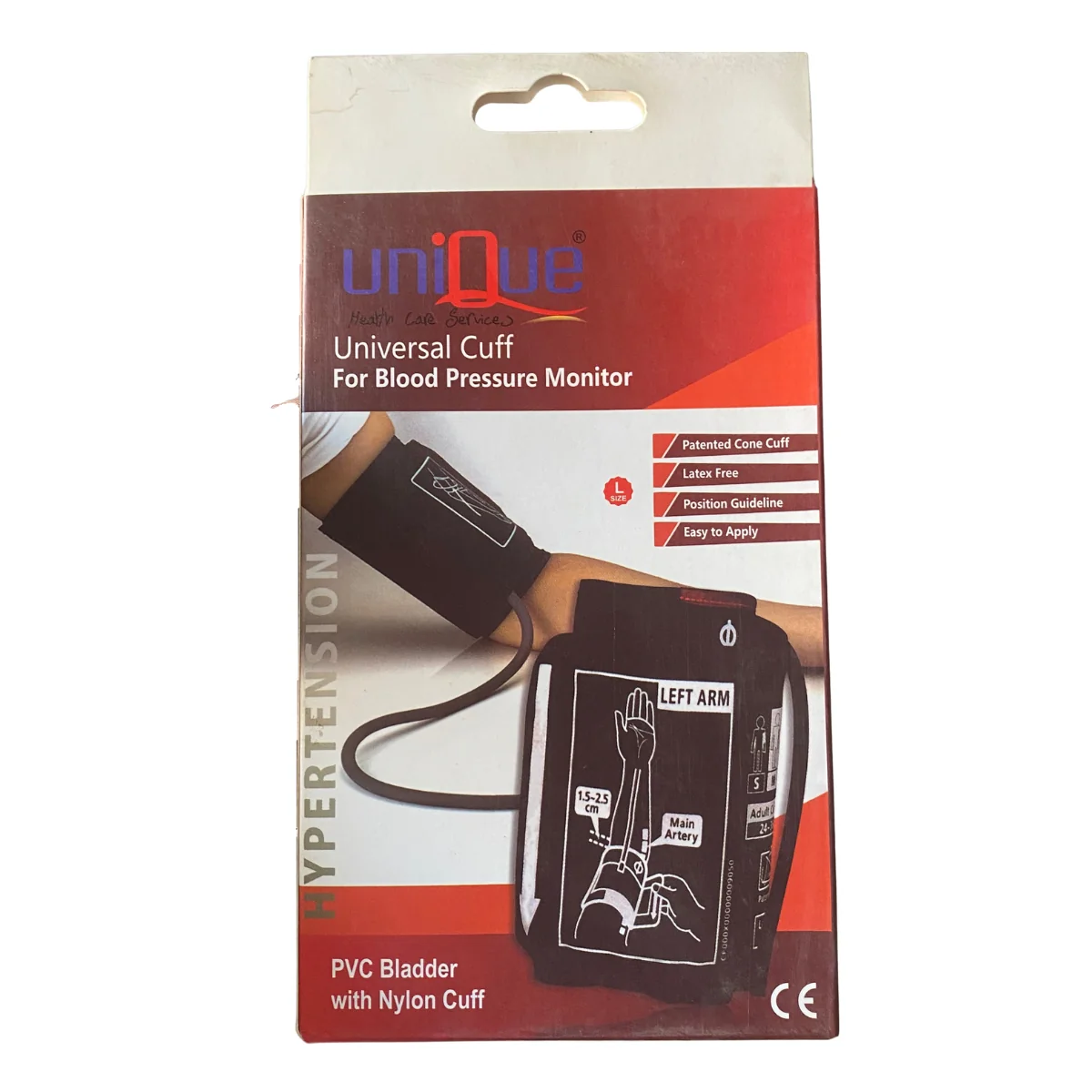
If multiple adults in your Pakistani household use the same machine—such as an elderly mother with slender arms and a son with a broader athletic build—swapping cuffs between tests is cumbersome. Many top medical brands like Certeza BM-408 feature an ergonomic Universal Wide-Range Cuff (22 cm to 42 cm) that accommodates medium, large, and extra-large arms without compromising clinical precision.
5. Anatomical Cuff Alignment & Common Positioning Mistakes
- Distance from Elbow Crease: Position the bottom edge of the cuff exactly 1 inch (2 to 3 cm) above your antecubital elbow crease. Placing the cuff directly over the elbow joint prevents full inflation and triggers E-3 errors.
- Artery Mark Alignment: Find the line or arrow marked “ARTERY” on your cuff. It must align over the brachial artery located on the inner side of your bicep.
- Snugness Rule: Fasten the Velcro so you can comfortably slide only two fingertips beneath the cuff at the top edge. If you can slide your whole hand, it is too loose; if you cannot slide a fingertip, it is too tight.
6. Frequently Asked Questions (Cuff Sizing FAQs)
Q1: How much does the wrong blood pressure cuff size affect readings?
A: Using a cuff that is too small for your arm can falsely overestimate your systolic blood pressure by 10 to 15 mmHg. An oversized cuff can underestimate blood pressure by 4 to 8 mmHg.
Q2: What is the standard blood pressure cuff size in Pakistan?
A: Most digital BP monitors ship with a standard medium adult cuff (22 cm to 32 cm). However, over 40% of Pakistani adults with higher BMIs require a wide-range or large cuff (22 cm to 42 cm).
Q3: How do you measure arm circumference for a blood pressure cuff at home?
A: Wrap a flexible cloth measuring tape around the midpoint of your upper arm—halfway between your shoulder tip and elbow tip. Note the measurement in centimeters.
Q4: Where should the artery index marker be placed on the arm?
A: The artery index marker must be aligned directly over your brachial artery on the inner side of your upper arm, approximately 1 inch (2 to 3 cm) above your elbow crease.
Find genuine replacement cuffs, adapters, and certified digital monitors at Civil Surgical Pakistan with nationwide delivery.